06/01/2026
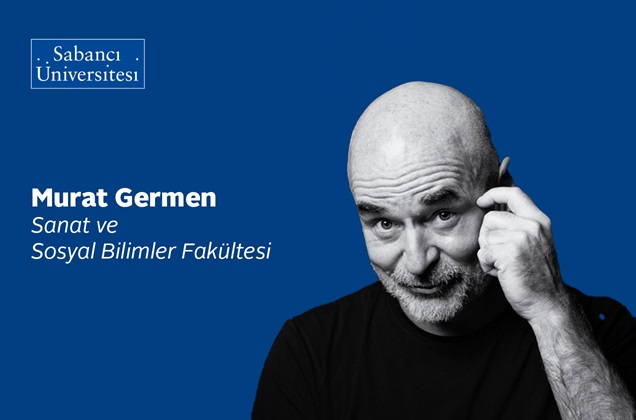
Murat Germen
Faculty of Arts and Social Sciences, Faculty Member
Istanbul is a strange place. It kills and gives life, it grieves and it rejoices... Istanbul seems to have no scales, no balance, no measure. In seconds, a tremendous feeling of joy can turn into sadness or anger, a bright and sunny day can become a damp and unpleasant atmosphere, and what seems well-off can soon turn into a poor neighborhood.
Istanbul has seven hills, perhaps that's why everyone uses Istanbul to their heart, because Istanbul is not like someone who doesn’t get along with others easily; Istanbul adapts to any situation. Most other metropolises considered world capitals don't give their inhabitants as much freedom as Istanbul. But is this a good thing? The city's complex, sometimes dirty, ugly physical structure makes one say, "No, this is not a good thing at all!"
Perhaps Istanbul is sincere, it doesn't hide its filth behind pristine surfaces, all its intestines are out in the open. Or is it perhaps because Istanbul is hasty, careless, untimely, unconscious, and neglected?
Many people come to Istanbul to make money; for many, Istanbul is not their "homeland." Many visitors, who use and discard Istanbul like a disposable tissue, don't consider their "homeland" worthy of such treatment; their homeland is always more sacred, which is why they can never quite shake off their status as visitors.
When one thinks of Istanbul, the concept of "capacity" comes to mind; it has long since reached its capacity, this place, once "a land of gold," now reduced to construction debris and mud after rain and floods, yet it still holds enough resilience to contain the last straw.
Although real estate developers and land speculators try to overwhelm Istanbul with high-rise buildings, this city is essentially a living organism that has developed and continues to develop horizontally. Istanbul's beauty lies in its horizontality, not its verticality; Istanbul should never aspire to become Manhattan.
Istanbul consumes art, culture, gastronomy, architecture, and life in its own unique way. Visitors to the world's major, developed, and organized metropolises simply cannot find the same vibes as in Istanbul. Istanbul has plenty of imitation goods, but at least their methods of production and consumption are original.
In Istanbul, a minority works, and the majority consumes. You won't find the same "human tide" in the streets of Western metropolises where the majority work as you do in Istanbul. On a Saturday night in Istanbul, around 2-3 AM, there's heavy traffic on the bridge; there's either no world city that can counteract this vibrancy, or it's rare to find one.